
Every support team eventually hits the same wall: volume grows faster than headcount, and the tooling that got you here starts working against you. This piece walks through a practical, no-nonsense approach — the kind you can start applying this week.
Start with the problem, not the tool
It is tempting to reach for a new feature or integration the moment things feel hard. But the highest-leverage move is almost always to get specific about what is actually breaking. Is it response time? Resolution quality? Agent burnout? Each points to a very different fix.
Pull the last 30 days of conversations and tag them honestly. You will usually find that a small number of issue types drive the majority of your volume — and that is exactly where automation and self-service pay off fastest.
The teams that win are not the ones with the most tools. They are the ones who know precisely which problem they are solving this quarter.
Build the loop, then tighten it
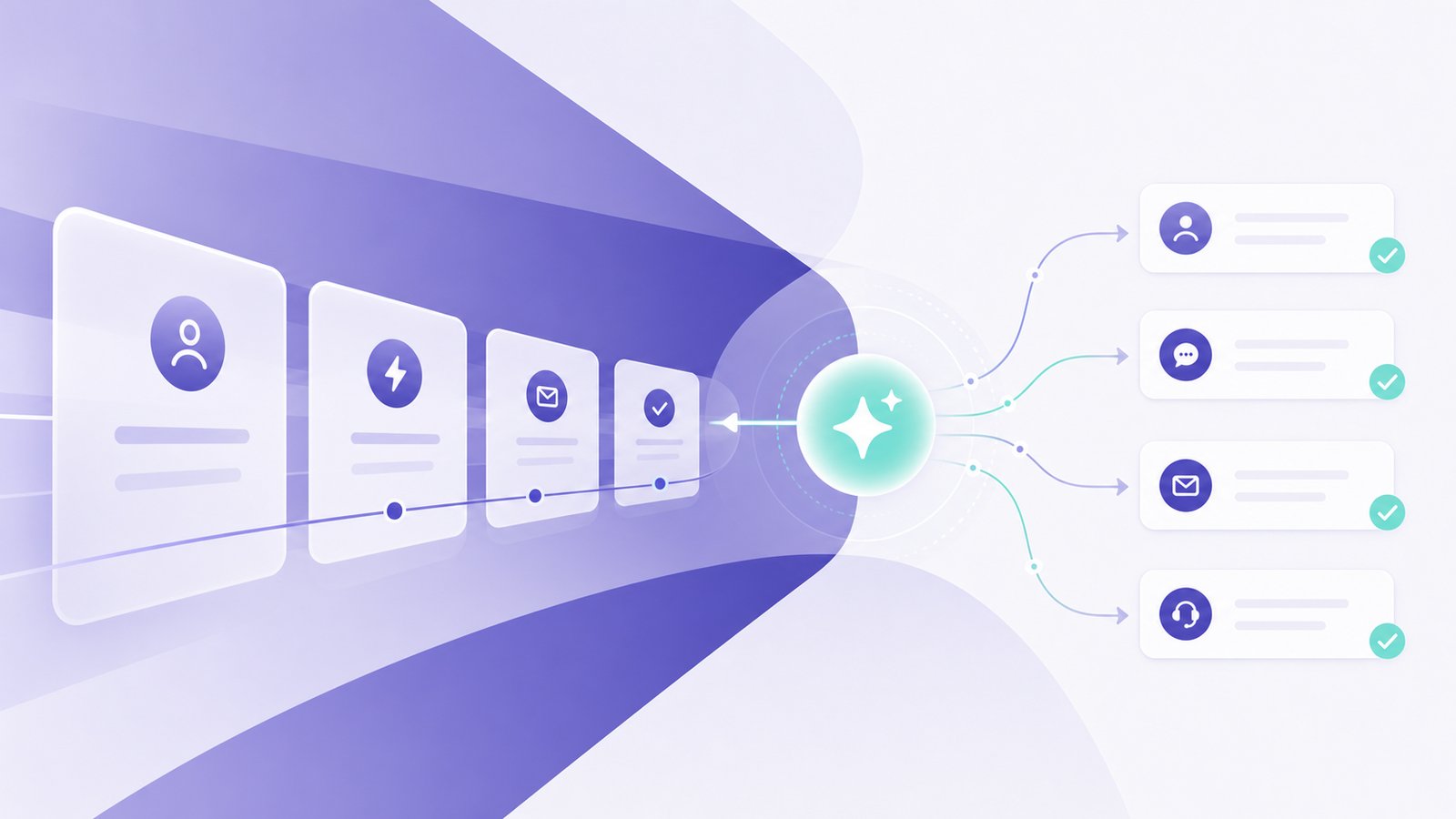
Great support is a loop: capture the conversation, route it to the right place, resolve it well, and learn from it. Most teams have all four steps — they are just slow and leaky. Map yours end to end and look for the handoffs where context gets lost.
- Centralise every channel so no conversation lives in someone's personal inbox.
- Let automation handle triage and routing — humans should not be sorting mail.
- Give agents the customer's full history inline, so every reply starts warm.
- Close the loop with insights that tell you what to fix or automate next.
Where AI actually helps
The useful question is not "should we use AI" but "which part of the loop should AI own?" Triage and first-draft replies are low-risk, high-volume wins. Full resolution works well for routine, well-documented issues. Keep humans on the ambiguous, emotional and high-stakes conversations — that is where they shine.
The goal is not to remove people. It is to give them room to do the work only people can do.
Measure what your customers feel
Internal metrics matter, but lead with the ones customers actually experience: time to first response, time to resolution, and a satisfaction signal attached to real conversations. When those move, everything else tends to follow.
Review them weekly, share them widely, and tie every process change back to one of them. Momentum comes from a team that can see its own progress.
The takeaway
You do not need a massive re-platforming project to make support feel better. Get specific about the problem, tighten the loop, point AI at the routine work, and measure what customers feel. Do that consistently and the results compound — quarter after quarter.

Written by
Noah Bergström
Head of Design